
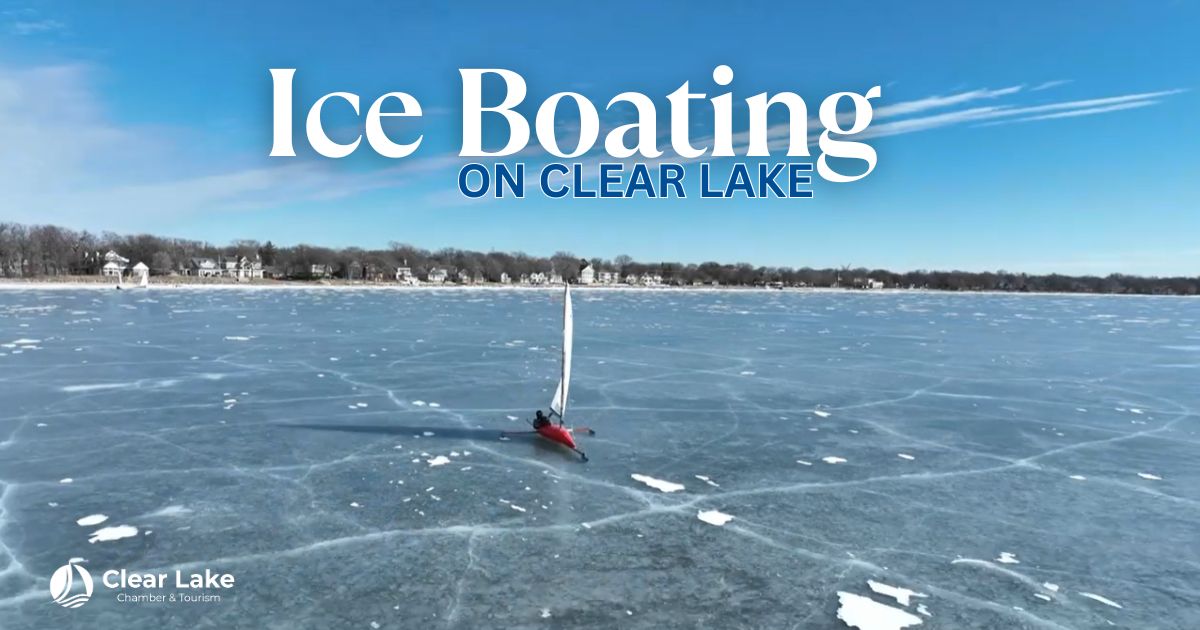
If you’ve ever spotted a sleek sailboat gliding across a frozen Clear Lake at incredible speeds and wondered what it was, you’re not alone. Ice boating is one of the most exhilarating and least understood winter traditions here, and many locals have never seen it up close. We spoke with an experienced Clear Lake ice boater to learn what the sport is really like, from the equipment and conditions to the history and the thrill of it all.
What Is Ice Boating?
Ice boats are lightweight sailboats fitted with three metal runners—one in front for steering and two in the back for stability. Our local expert sails a Nite, which has a fiberglass hull with a wooden mast, runner plank, and springboard. Another popular model is the DN, an all-wood class you’ll often see on Midwest lakes.
Clear Lake is well-suited for the sport thanks to its consistent wind. Under the right conditions, ice boaters can reach speeds of 40–60 mph, making it one of the fastest forms of wind-powered travel.
What Makes Perfect Ice?
Ice boaters look for a very specific set of conditions. The ideal surface is smooth, black ice that forms during the first few days after the lake freezes, before any snow arrives. Even a light dusting can create drifts that slow the boat or affect maneuverability. Because these pristine conditions are rare, ice boating often happens in short windows that come and go quickly throughout the winter.
How Do You Steer and Stop?
An ice boat is steered using a tiller connected to the front runner. Some boats also have foot pedals for additional control. Stopping is similar to a sailboat: point the boat directly into the wind to let the sail lose power. It takes distance to slow down, and depending on your speed, you may glide quite a ways before coming to a full stop.
Safety on the Ice
Ice boating is thrilling, but it comes with real risks. Helmets are essential. Many ice boaters wear flotation suits or life jackets and carry ice picks in case they need to pull themselves out after breaking through. The most important rule is to check ice conditions constantly. Never sail alone into an unchecked area, and always stay alert for cracks, drifts, and other hazards. Equipment failures or catching a runner in a crack can cause sudden loss of control.
What Does It Feel Like?
When asked to describe the experience, our expert summed it up in one word: exhilarating. When a gust catches the sail, the boat flexes and accelerates instantly. It feels like sailing, flying, and skating all at once.
A Bit of Clear Lake History
While exact dates are hard to pinpoint, ice boating on Clear Lake likely dates back to the 1920s or earlier. The combination of strong winter winds and wide-open ice has always made the lake a natural home for the sport.
Where to Watch Ice Boating
Because perfect ice rarely lasts long, watching ice boating can be a matter of timing. When conditions line up, the City Park seawall is usually a great vantage point. From there, spectators can see boats crossing the lake at remarkable speeds. Last winter, a lack of snow created a longer-than-usual window for the sport.
How to Learn More
If you’ve never seen ice boating in action, you’re in luck. Here’s some footage on the Clear Lake Iowa YouTube channel to give you a closer look.
Clear Lake’s Winter Secret
Ice boating is fast, demanding, and deeply rooted in winter tradition. It requires perfect conditions that don’t happen every year, which makes it even more special when those days arrive. If you see ice boats on Clear Lake this winter, take a few minutes to watch from the shore. It’s unlike anything else you’ll see on a frozen lake.